


Understanding Contemporary India
What is Contemporary India? Present-day India. Contemporary India and Education: This is the India we see and reside in today. This is India’s present fast, young, dream-laden. At the same time, it has a long history and deep traditions. Therefore, the so-called contemporary India comprises both the old and the new.
India has one of the largest groups of youths around the world. Hence, education is and has become a vital aspect of modern-day India. It shapes the way in which all this youthful energy turns into the future of the nation.
The Role of Education in Contemporary India
As most people say, education today is not other learning by reading the prescribed books, but a lot of things from life skills from learning, and making intelligence among children intelligent to think, ask questions, and grow. In addition, it is an essential condition for getting better jobs and better lives.
Education acts as a key, a key to open all the doors to opportunities, and builds confidence in oneself. No, education would stop one from going anywhere at all. Education can make the impossible feel possible.
Evolution of the Indian Education System
As for all else, changes were forever occurring in the education system in India, from time immemorial, when students would learn in gurukuls. Here they stayed with their teachers and learned values along with knowledge. Thereafter came the schools and colleges in the order of the British System.
In the present day, modern India aligns itself with education on a global platform. Present-day classrooms emphasize understanding as opposed to rote learning-and herein lies the crux of the matter.
Education Policies in Contemporary India and Education
In fact, the NEP of 2020 is the point of reference that brings the necessary turnaround into the education of contemporary India. It encourages learning by doing, supports regional languages-long terms for subjects, and has also brought in flexibility. It promotes and fosters creativity and curiosity. It does not cause undue pressure but rather puts joy into learning and motivates students to find out their interests more freely.
Technology and Education in Contemporary India and Education
Today’s India owes much of its education system to various technological innovations. Online classes, learning apps, and digital boards tend to be the normal thing nowadays. Technology kept education alive during the epidemic.
Technology also supports students trapped in remote areas. Learning travels through a mobile phone and the internet to reach villages. However, access remains a challenge for some.
Challenges in Contemporary India and Education
New-age Indian education goes through so many bottlenecks. In some schools, either good teachers or proper infrastructure cannot be afforded. Poverty still plays a part in many school dropouts.
Gap Between Urban and Rural Education. Schools have smart boards in cities, whereas in villages, many schools do not even have classrooms. Thus, to this day, equality in education remains a dream rather than a reality.
Opportunities and Innovations: Contemporary India and Education
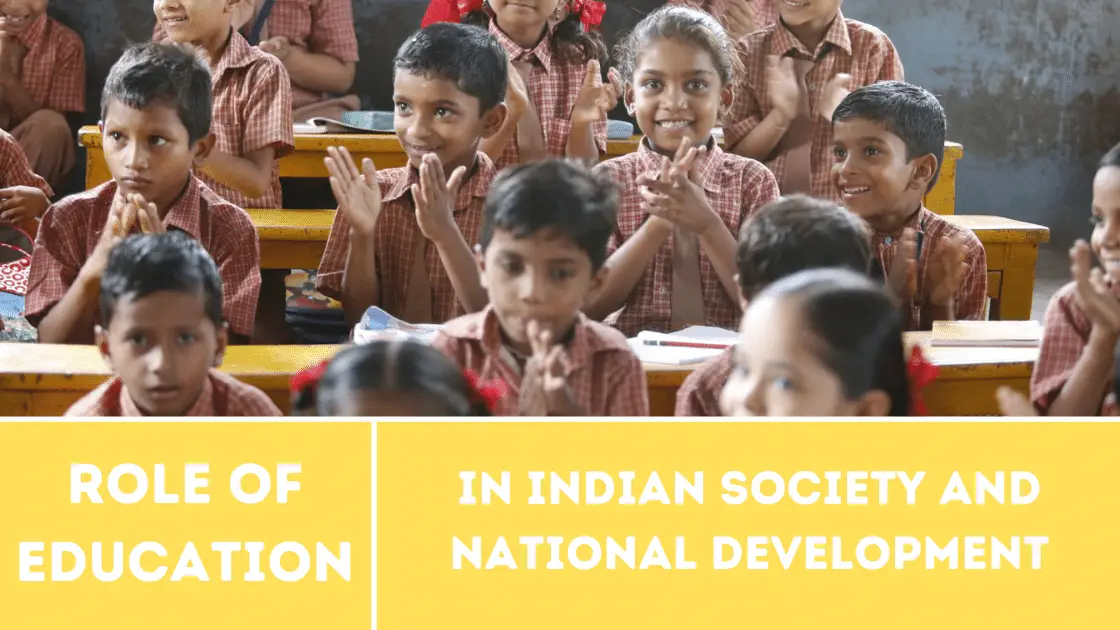
As modern India progresses, education beams a ray of hope amidst the difficulties. With the growth of EdTech startups, learning has found new mediums: engaging videos and games have sparked learning fun. Coding, robotics, and design thinking are now in the domain of students. Thus, education stands as the creation made from creativity and not from fear. Thus, make India Future Ready by this transition.
Education and Employment in Contemporary India and Education
Hence, today’s education in India is associated with jobs, and a degree is as good as a skill. An employer does not need a mere memorizer; he needs a problem solver. Skill-based education prepares students for actual work, and education comes down to a practical, useful level. This reduces the level of unemployment.
The Role of Teachers and Parents in Contemporary India and Education
Well-settled teachers are wise guides who have always been a light to young minds in modern India. They do not just impart lessons; they weave dreams and build characters. Parents play a significant role in this matter. With the presence of parents, the learning level of children gets enhanced. Education becomes, thus, a common journey for all.
Values and Ethics in Education
Until today, Education is imparted in India mostly with emphasis on value-based education. Values as important as marks are honesty, respect, and responsibility. Education creates a human being, not a machine.
When students learn morals and ethics, they make society stronger. Thus, it builds careers and refines personality.
The Future of Education in Contemporary India and Education
Flexible learning paths and the growing exposure beyond the borders promise a glittering future for education in modern India. The students will learn at their own pace. Inclusion of learning for all, where every child gets an opportunity to learn irrespective of their background, presents the image of a dream India.
Conclusion
Contemporary India and Education are probably the same word in the modern context. Education can change the tables for growth, equality, and innovation. It empowers the youth towards democratic strength. Yes, there are challenges, but progress is made every day. Education will indeed usher in a better tomorrow for present-day India, with workable policies, caring teachers, and even more curious students. Like a river never resting, education takes its course in India.
FAQs
- What is meant by contemporary India and education?
It refers to the present-day education system and learning trends in modern India.
- Why is education important in contemporary India?
Education helps reduce poverty, create jobs, and build a strong nation.
- How has technology changed education in India?
Technology allows for online learning, digital classrooms, and improved access to education.
- What is the role of NEP 2020 in education?
NEP 2020 aims toward skill-based, flexible, and student-friendly education.
- What challenges does Indian education face today?
Chief challenges include inequality, lack of resources, and access in rural areas.
Also Read: IIM Sambalpur: The Powerful Rise of India’s Youngest IIM