


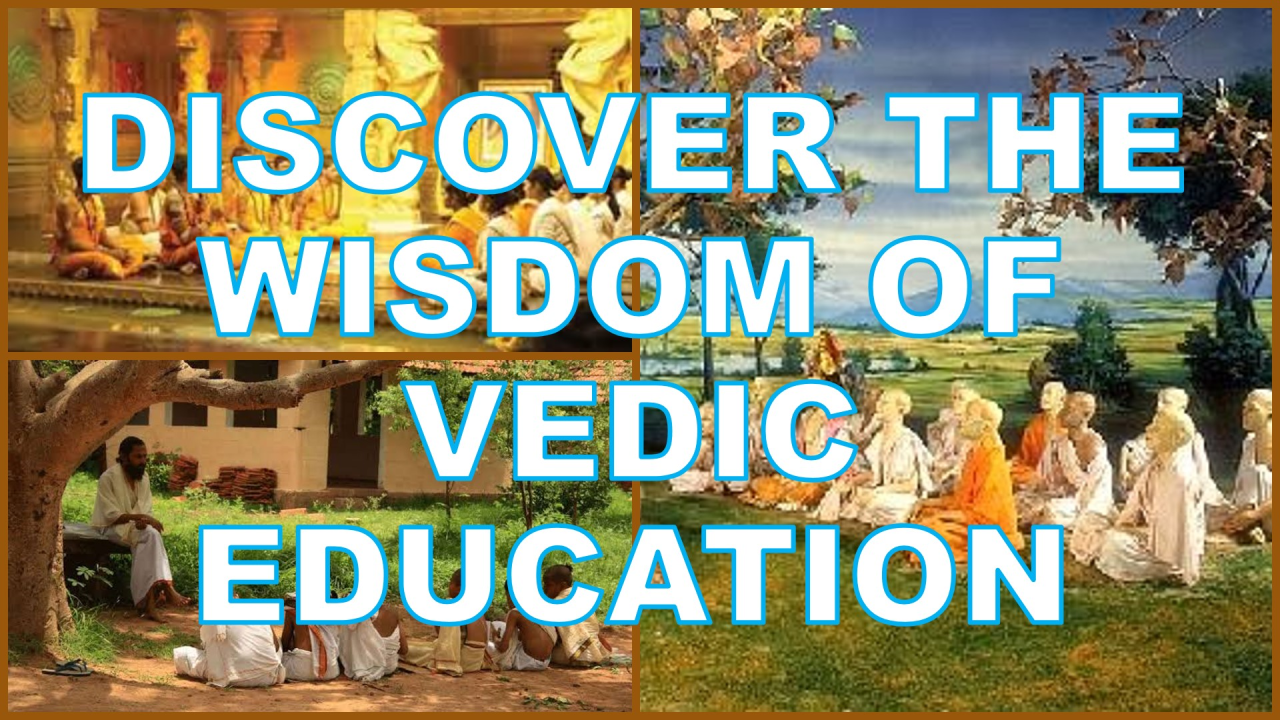
The Aims of Vedic Education system established one of the first educational systems that existed throughout human history. Students in ancient India studied knowledge from sacred texts, which were their Vedic texts, for thousands of years. The educational system in that time period shared its objectives with modern educational institutions. Vedic education did not train students for exams or their future professions. The educational system was thus the process that strove to shape all aspects of human development, which include mental capacity, physical abilities, and spiritual growth.
The Gurukul system required students to live with their teacher. Students acquired discipline and wisdom, together with essential life skills. Education was viewed as a journey that leads individuals from ignorance to knowledge. Aims of Vedic Education The famous Vedic idea states that knowledge should lead people from their state of ignorance into understanding of the truth.
Education experts today value this ancient educational system because it taught students character development, together with knowledge acquisition and self-discovery. The study will examine Vedic educational goals to show how this system continues to influence present-day educational methods.
Understanding the Meaning of Vedic Education
The goals of Vedic Education require that people first comprehend its fundamental meaning. The term” Vedic” derives from the Vedas, the oldest sacred textbooks of India. The textbooks give knowledge about philosophical generalities, scientific findings, verbal parcels, and spiritual practices.
The students from ancient India acquired knowledge through three main activities,s which included listening, memorizing, ng and teacher-led discussions. The students learned beyond their book studies. Students developed their discipline skills through training in meditation, physical exercises, and social service activities. Vedic education aimed to achieve a balance between students’ physical development and their mental development. The educational process helped people see their inner selves, which enabled them to gain comprehensive knowledge about life. The Vedic education system existed to answer the essential inquiry about how people attain wisdom and live their lives in a purposeful manner.

The Main Aims of Vedic Education
- Self-Realization – The Highest Aims of Vedic Education
The primary goal of the Aims of Vedic Education was to help students achieve self-realization. The self and the universe exist as the fundamental truth, which must be understood. Students had to think deeply about their existence and their life purpose.
The teachers thought that knowledge should lead people to discover the complete truth. Aims of Vedic Education The path to moksha, which signifies liberation through spiritual freedom, was the purpose of education according to their belief. Students achieved learning results by practicing reflection and meditation instead of using memorization techniques. The practices helped them achieve inner calmness while developing their ability to make wise decisions.
People still hold the belief that education should serve two purposes for students. The education system should provide career training while enabling students to learn about their personal identities and core beliefs.
- Development of Character and Moral Values
The aims of Vedic Education pursued character development as its main goal. The ancient teachers believed that society would suffer from knowledge that lacked good character. Students learned to practice honesty, respect, discipline, and kindness. The teacher served as a role model. The students observed their teacher’s conduct and attempted to practice those same principles. The method produced responsible people who demonstrated concern for others. The moral training process helped students develop into responsible citizens and future leaders. The present educational system defines this educational method as value-based education. Schools today also try to teach respect, teamwork, and responsibility. Vedic education established its values as the main focus of educational practice.
- Intellectual and Mental Development
The educational goals of Aims of Vedic Education studies are aimed at developing both mental strength and intellectual capacity. Students studied many subjects, which included grammar,d mathematics, astronomy, philosophy, and literature. Ancient classrooms used debates and discussions as their main teaching method. Students raised questions while they studied different concepts. The students developed their ability to think critically and reason through this particular practice. Teachers wanted students to achieve a deep understanding of the concepts that they taught instead of basic factual learning. The method improved both memory capacity and the ability to focus on tasks. The learners developed into thinkers who could solve problems and understand difficult concepts.
- Physical Development and Healthy Living
The Vedic educational system aimed to develop both physical health and other educationalobjectivess. Preceptors believed that physical health enables scholars to achieve their maximum internal capabilities. Scholars rehearsed conditioning like yoga, exercise, and martial arts training. The training programs developed physical strength, balance capacities, and abidance capacities. Gurukul life operated on a system of straightforward living and strict geste
rules. Scholars began their day by waking up at dawn, and they fulfilled their diurnal liabilities while spending time outside. The active outdoor conditioning of this life helped scholars maintain their attention throughout the day. The ultramodern scientific exploration supports this principle. Regular physical exertion improves literacy capacity, memory function, and emotional well- being. Vedic education established strong physical capabilities, which scientists consider equal to intellectual understanding of knowledge.

- Spiritual Development and Inner Peace
The educational objectives of Vedic education included spiritual development as a primary goal. Students learned prayers, meditation, and sacred chants. The students used these practices to improve their ability to focus and reach a state of peacefulness.
Bible study did not require students to accept all teachings without questioning their accuracy. Students studied deep philosophical concepts about life,d truth, and the universe.
Contemplation served as a tool for mind control, which helped people drop their internal distractions. Ancient preceptors believed that a peaceful mind allows better literacy and clearer thinking.
Seminaries’ moment still educates awareness and contemplation practices because these styles help scholars concentrate better and maintain emotional stability.
- Social Responsibility and Service
Vedic education goals equipped students with skills to benefit their communities. The purpose of education extended beyond achieving personal academic excellence. The educational system existed to support both individual development and the establishment of peaceful communities.
Students discovered through their studies that they should practice charitable giving, show hospitality, and treat all people with dignity. The scholars learned that their duty to support society formed an abecedarian part of their actuality.
Scholars at Gurukuls carried out essential diurnal liabilities, which included cleaning, cuisine, and environmental conservation. The conditioning developed in scholars the essential chops of cooperation and the character quality of modesty.
The concept maintains its full relevance for contemporary society. People who receive education will strengthen their communities through their efforts to benefit society.
- Preservation of Culture and Knowledge
Vedic education pursued its second primary goal of safeguarding cultural heritage. Ancient scholars believed that wisdom should pass from one generation to the next. Students memorized sacred texts and recited them carefully. The oral tradition enabled people to maintain the Vedas for more than one thousand years. Education safeguarded language and literature, philosophical teachings, and cultural traditions. The ancient knowledge would have vanished without this system. Today, historians value educational methods because they helped to safeguard important cultural traditions.
Unique Features That Made Aims of Vedic Education Special
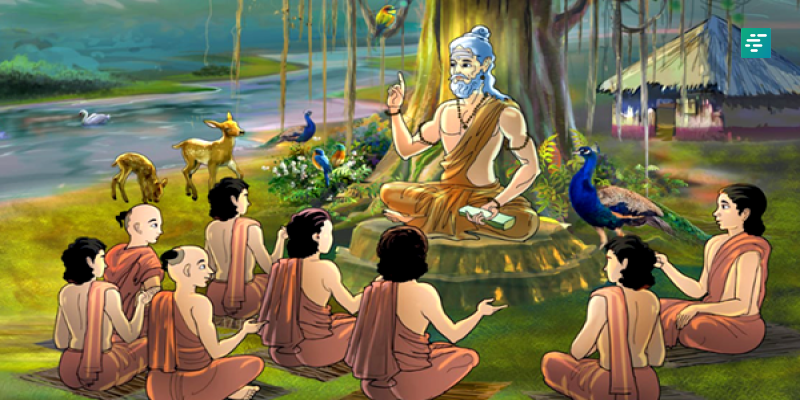
Students at Vedic education institutions studied in a special environment, which helped them achieve their educational objectives. The Gurukul system established a strong connection that teachers used to build relationships with their students. Students lived with their teacher like family members. The relationship between teachers and students enabled teachers to assist students in their academic progress and their personal development. The natural world had a significant impact. Gurukuls established their locations in forested areas or in tranquil village settings. The silent surroundings enabled students to concentrate on their studies while they carried out their deep thinking process. Students experienced learning as an entire life experience that extended beyond their classroom education.
Why the Aims of Vedic Education Still Matter Today
The current educational system can benefit from Vedic educational objectives, according to many specialists. Today’s schools often focus heavily on exams and grades. Students require emotional strength, creative abilities, and ethical values, according to research. Ancient education systems understood this balance very well. Vedic education established holistic development as its core educational principle. The program developed students through simultaneous training of their mental, physical, and spiritual abilities. Modern educators now use similar ideas through life-skills training, yoga, mindfulness, and value education programs. Vedic education wisdom continues to lead modern educational systems in multiple ways.
Denouement
The Aims of Vedic Education system aimed to teach students more than basic academic subjects because it had deeper educational objectives. The ancient system developed human beings who possessed wisdom, self-control, and deep empathy. Scholars developed their character while they learned to study and discover their life’s charge. Aims of Vedic Education: The scholars achieved physical fitness, internal sharpness, and spiritual enlightenment. Aims of Vedic Education developed complete human beings instead of modern systems, which only taught career skills. Aims of Vedic Education The present world still experiences the strong influence of these fundamental beliefs. Educational institutions today acknowledge the need for students to develop their complete potential through academic study, character development, and emotional health programs.
FAQs
- What were the main Aims of Vedic Education?
The primary objectives of Aims of Vedic Education sought to achieve self-realization through character development, intellectual advancement, physical health, spiritual growth, social duty, and cultural heritage protection.
- Why was character development important in Vedic education?
Teachers believed that knowledge gained from bad character traits would create problems for society. Therefore, students learned honesty, discipline, and respect.
- What subjects were taught in Vedic education?
Students learned about the Vedas and philosophy, grammar and mathematics, astronomy and ethics through their studies.
- What was the Gurukul system?
The Gurukul system functioned as a traditional educational system, which required students to reside with their instructor and acquire knowledge through their daily responsibilities, discipline training, and academic work.
- Is Aims of Vedic Education still relevant today?
The answer is yes. Many modern schools adopt ideas like holistic learning, yoga, meditation, and value education, which stem from Vedic principles.
Also Read: Basic Course in Medical Education: The Smart Teacher’s Secret to Better Doctors