






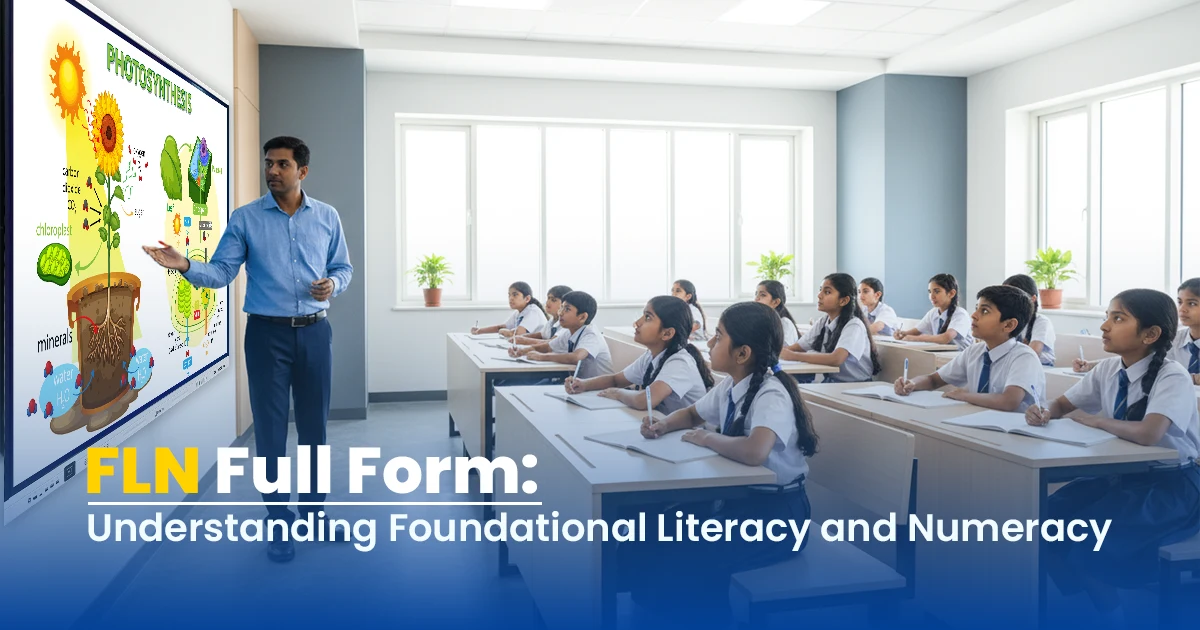
What is FLN Full Form in Education?
The educational term FLN stands for Foundational Knowledge and Numeracy. The three words might sound straightforward, yet they retain the capacity to determine a child’s unborn path.
Now, suppose about this. Can a child break calculation problems without knowing figures? Or read a story without understanding words? The answer is no. The educational system is used to break this problem. The program guarantees all children will develop reading, writing, and counting capacities during their original literacy period.
Foundational knowledge and Numeracy( FLN) establishes essential chops that scholars must develop. These basics help children learn everything differently later. Scholars who warrant capacities face academic challenges when they reach advanced educational situations.
Why FLN in Education is So Important
You might be wondering about the significance of FLN in educational systems. Strong abecedarian knowledge and fine chops enable children to learn enjoyably. Scholars retain the capability to read instructions while they break down problems and understand generalities without detention. The situation becomes delicate when a pupil fails to learn essential chops. Scholars witness classroom confusion because they can not understand the material. Scholars drop their educational interest and tone of assurance through this process.
Here’s why FLN’s full form in education matters so much:
- The program helps students to become more sure of their reading abilities.
- The program helps students to develop their fundamental math abilities.
- The program helps students to achieve complete brain development.
- The program helps students acquire knowledge that will benefit their future academic pursuits.
Key Components of FLN in Education
Let’s look deeper into what makes up Foundational Literacy and Numeracy (FLN).
- Foundational Literacy
This part focuses on reading and writing. It includes:
- Recognizing letters and words
- Reading simple sentences
- Understanding stories
- Writing basic sentences
A child with strong literacy skills can express thoughts clearly. They can also understand what they read, which is very important.
- Foundational Numeracy
This part focuses on numbers and basic math. It includes:
- Counting numbers
- Understanding shapes
- Basic addition and subtraction
- Solving simple problems
When children understand figures well, they can handle real- life tasks like shopping or measuring effects. Together, these two corridors make FLN in education complete and important.
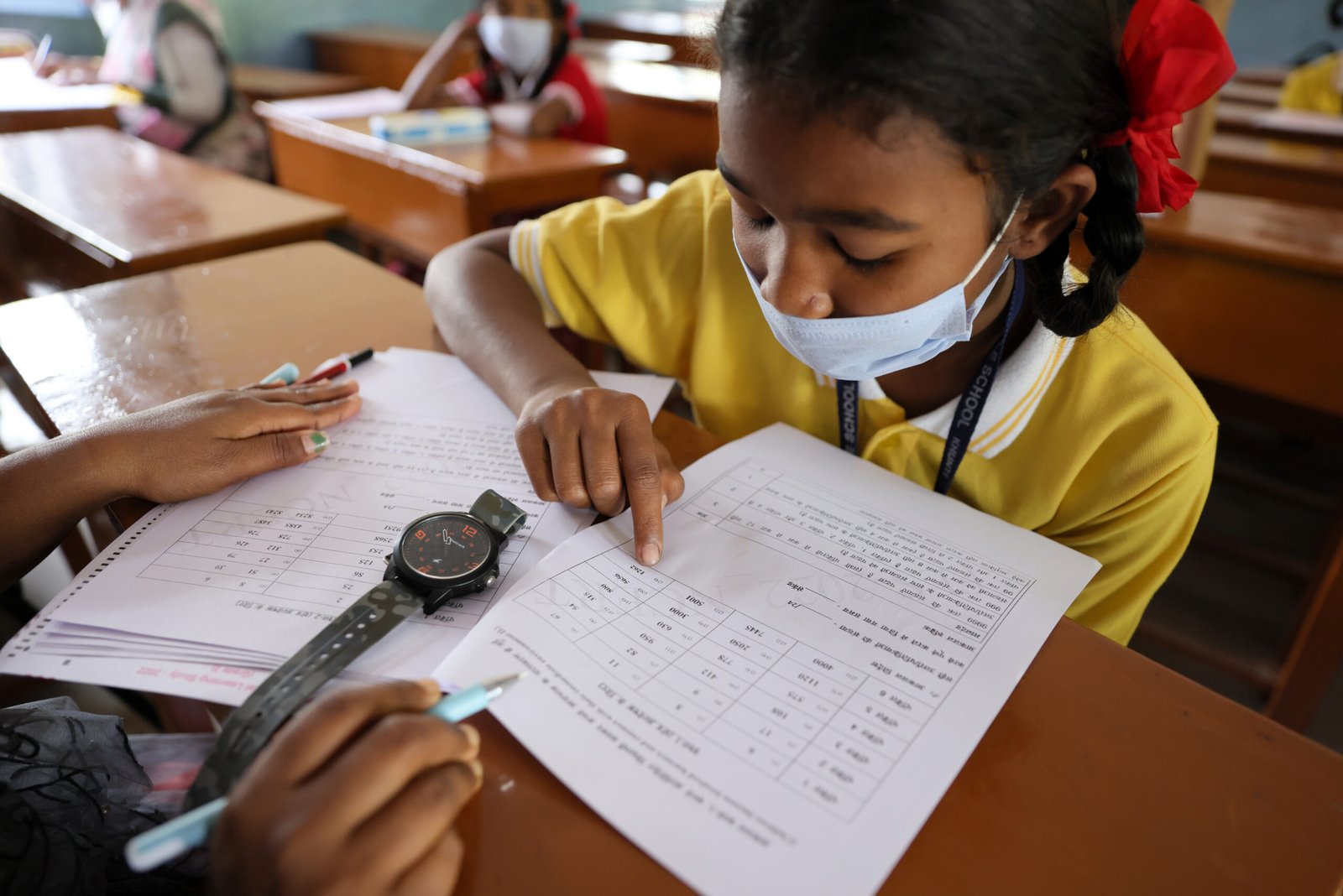
FLN in Education Under NEP 2020
You may have heard about NEP 2020( National Education Policy 2020). The educational system places special emphasis on the full form through its perpetuation across educational institutions. The policy authorizations that all children achieve foundational knowledge and numeracy skills by the third grade. The thing of this design is to establish a specific target that it follows. Why Grade 3? Because after that position, subjects become more complex. Learning becomes delicate because weak introductory chops make understanding accoutrements hard. The government established NIPUN Bharat Mission programs together with other enterprises to help achieve FLN pretensions. The programs serve to enhance educational issues in primary academy settings.
How Teachers Help Build FLN Skills
Preceptors play a crucial part in developing foundational knowledge and numeracy.
Preceptors use fun and simple styles to educate children. Liar helps children to develop their reading capacities. The literacy process of calculation becomes pleasurable through games and conditioning.
Then’s how preceptors support FLN in education
- Use interactive teaching methods
- Encourage reading habits
- Practice basic math daily
- Give personal attention to each child
A good teacher knows that every child learns differently. So, they adjust their teaching style to meet each student’s needs.
Role of Parents in FLN in Education
Parents also play a huge part in structuring FLN chops.
Literacy is not only in the academy. It also happens at home. When parents support children, learning becomes stronger.
Here are simple ways parents can help:
- Read stories with children daily
- Practice counting during daily tasks
- Encourage writing simple words
- Create a learning-friendly environment
For example, asking a child to count fruits at home can improve numeracy skills. Similarly, reading bedtime stories boosts literacy.

Challenges in Achieving FLN in Education
Even though FLN’s full form in education sounds simple, achieving it is not always easy.
Many schools face challenges such as:
- Lack of trained teachers
- Limited learning materials
- Large class sizes
- Different learning levels among students
Some children face difficulties in learning because their home environment does not provide sufficient support. The process of learning is affected by this situation. The existing problems require dedicated planning and execution to achieve their solution. The educational institutions and government bodies are making dedicated efforts to enhance the current conditions.
Simple Strategies to Improve FLN Skills
Now let’s talk about practical ways to improve foundational literacy and numeracy.
For Literacy:
- Read daily for at least 20 minutes
- Use picture books for better understanding
- Practice writing short sentences
For Numeracy:
- Play number games
- Use real-life examples, like shopping
- Practice basic calculations regularly
Benefits of Strong FLN Skills
The development of strong skills by children brings them multiple advantages. The students become self-assured in their learning process. The students gain a better understanding of subjects, which helps them achieve excellent results in their tests.
Here’s what strong FLN in education can do:
| Benefit | Impact |
| Better Reading Skills | Improves comprehension |
| Strong Math Skills | Enhances problem-solving |
| High Confidence | Encourages participation |
| Lifelong Learning | Builds future success |
Why FLN in Education is the Future
The educational system undergoes rapid transformations. However, one thing remains constant: the need for strong basics. Reading and counting skills will remain necessary even when technology reaches its most advanced state. The reason for this is that it represents the future of educational progress. The program guarantees that all students receive the same chances to achieve success. Beforehand conception appreciation enables children to develop their creative capacities along with their capacity for innovative results and critical assessment.
Inference
Let’s combine all the information into one complete statement. The educational term, which stands for Foundational Knowledge and Numeracy, serves as the abecedarian element of educational development. Scholars who warrant strong chops will witness difficulties in both their academic studies and their unborn life conditioning. Through applicable schoolteacher and parent support, all children can develop essential skills demanded for their development. The stylish part? offers a straightforward yet effective approach that brings transformative results. The program helps children develop reading chops and problem-solving capacities, and a better understanding of the world. The following communication applies to parents, preceptors, and scholars alike. Strong foundations produce strong futures.
FAQs
- What is FLN’s full form in education?
FLN stands for Foundational Literacy and Numeracy, which focuses on basic reading, writing, and math skills.
- Why is FLN important for students?
FLN helps students understand lessons easily and builds a strong learning base for future education.
- At what age should children achieve FLN skills?
Children should achieve skills by Grade 3, as per education guidelines.
- How can parents support learning?
Parents can read with children, practice counting, and encourage writing at home.
- What happens if a child lacks skills?
Without FLN skills, a child may struggle with reading, math, and understanding school subjects.
Also Read:Kunal Professional Educational Academy: A Smart Path to Real Success