






While thinking of space, we imagine vibrant stars, far-away galaxies, or some crazy black hole. However, behind each new finding is also a scientific discipline aiming to decipher what we see. Astrochemistry vs Astrophysics are two of the areas I find most exciting, and they can feel very similar at first glance. Like, you think they do basically the same thing. Not really; they see the same universe from all of their little angles in their own way.
Many students into space and science end up searching for astrochemistry vs astrophysics because they want to work out the differences between the two fields. One that deals with the compounds and molecules out there in space, one that is more about the energies, gravity, and other influences governing the cosmos. The good thing is that both disciplines complement each other. Combined, they help scientists address some of humanity’s most fundamental questions, such as: How do stars form? How do planets form? Is there life beyond Earth?
What Is Astrochemistry?
Imagine that you’re baking a cake; you know how you want to eat it, but still have to load the proper stuffing inside. It never fails, the universe operates in a similarly lazy fashion. At its core, astrochemistry is all about what chemical ingredients are out there in the universe and how those ingredients mix or react with one another.
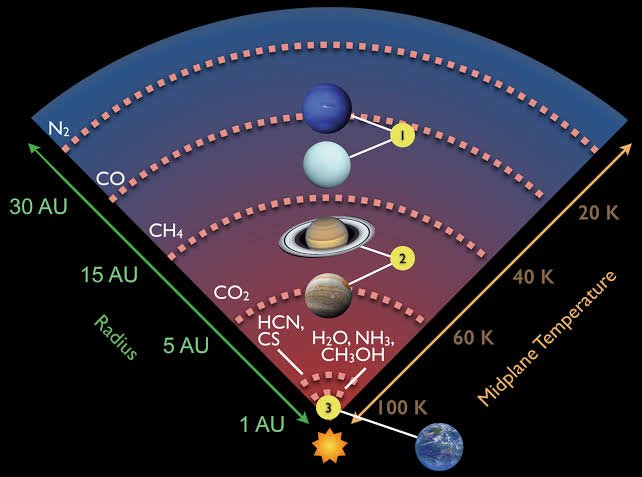
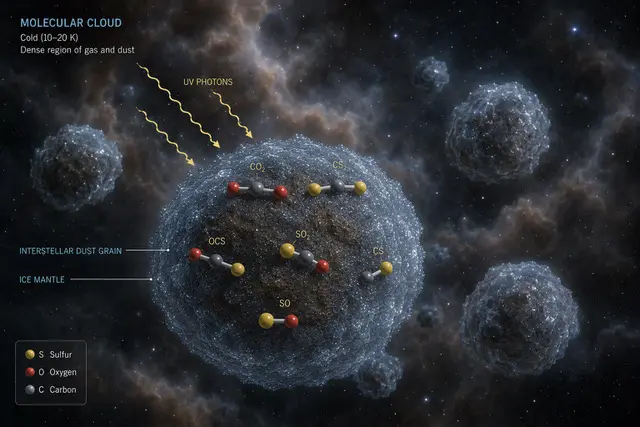
Astrochemists are looking for atoms, molecules, and tiny dust grains, as well as ice and frozen water, behind the enormous clouds that exist between our stars. They also investigate chemical reactions that occur at high temperatures and under extreme pressure. Sure, it may not look crowded in space, but there’s chemistry at work, simply doing its thing, building up slowly to coalesce into new material when the time is right.
It is a strategy that researchers have frequently been compelled to adopt, delving into vast telescopes to identify the molecules basking in the light they emit or absorb. We have already found water and methane, as well as ammonia, alcohol, and so many other organic particles floating out in space. The findings provide a more detailed picture of how planets may co-evolve, and inspire theories on the formation or transport of some of life’s basic ingredients near and far.
What Is Astrophysics?
Then you move from astrochemistry, which focuses on the classification of chemicals, to astrophysics, where all sorts of physical processes come into play. Astrophysicists explore topics as varied as gravity, light, heat, energy, radiation, and magnetism, plus all the motion that’s involved. They can explain why certain types of stars shine and how different galaxies rotate, right down to the nature of the dark and super dense stuff that resides at the core of a black hole.
Astrophysicists also study things billions of years old, using mathematics, computer simulations, satellites, and space telescopes. And they’ve got their heads stuck way up in figuring out how the birth of stars happens and what kind of life (or death?) awaits those lucky enough to live through galaxy evolution, plus trying to understand just exactly how our universe has expanded over space and time.
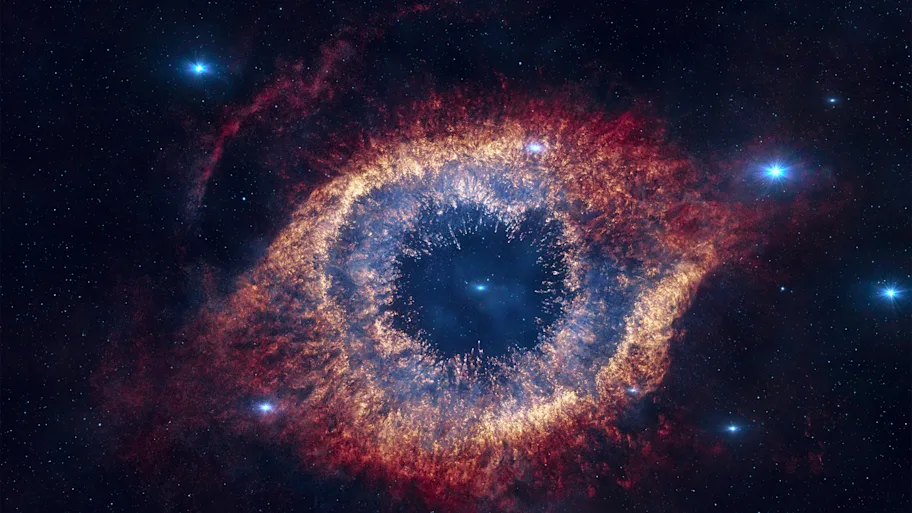
If I am to imagine images produced by real telescopes for astrophysics, they should probably be more like beautiful artwork rather than images representing some astronomical event or scientific confirming experiment.
Astrochemistry vs Astrophysics: The Biggest Differences
The easiest way to understand Astrochemistry vs Astrophysics is to compare their main goals.
| Feature | Astrochemistry | Astrophysics |
| Primary focus | Chemistry in space | Physics of the universe |
| Studies | Molecules, atoms, dust, gases | Gravity, energy, light, motion |
| Main objective | Understand chemical reactions | Explain cosmic behavior |
| Common tools | Spectroscopy, laboratory experiments | Mathematical models, telescopes, and simulations |
| Typical research | Comets, molecular clouds, planetary atmospheres | Stars, galaxies, black holes, dark matter |
Although these fields have different specialties, they often work together on the same scientific mission.
How They Work Together
These are all interdisciplinary sciences, and few advances in science come from one discipline alone. The greatest breakthroughs are most often made at the intersection of two areas of expertise.
Consider how a new star is born. Astrochemistry vs Astrophysics can tell you all about how super-massive clouds of gas condense together and begin stellar fusion reactions. But an astrochemist will know what kinds of molecular changes take place and how new compounds get produced around a newly-formed, but still hot star.
Or imagine we’re trying to find signs of extraterrestrial life: astrophysicists would be able to point us at stars with good prospects of having planets in their “Goldilocks” zones where there’s a chance for liquid water. Then Astrochemistry vs Astrophysics look at their atmosphere, seeking clues that it could host biological activities.
Career Opportunities: Astrochemistry vs Astrophysics
Astrochemistry vs Astrophysics, you can imagine this version of the question is almost entirely in regard to students who are geared toward 1 or 2 career paths. It boils down to what you would enjoy doing, not which field is better than the other.
If your heart runs on chemistry, lab work, and molecular science, then you could have a calling for astrochemistry. This includes working with observatories, universities, and space agencies to understand how the universe became chemically rich.
Astrochemistry vs Astrophysics science is likely your best course if math, physics, and solving complex problems interest you. It’s an insight into astrophysicists who work on spacecraft, telescopes, satellites, and mostly theoretical stuff.
Given that some practitioners have specialized skills across these domains, they are appealing collaborators on international study teams.
Why These Sciences Matter
Studying space is far more than curiosity. Astrochemistry vs Astrophysics research yields technological advancements that are seemingly unrelated, but critically important to life on Earth.
Space exploration has enhanced imagery, computer technology, telecommunications systems, weather prediction, and several other scientific devices utilized in the field of medicine. Each mission also expands our knowledge about the origins of the universe and how the universe continues to evolve.
When all is said and done, the best lesson these sciences have for us is that, like a tiny atom or the largest galaxy, we are all part of the same rules of nature.
Denouement
Astrochemistry vs Astrophysics is not a discussion about which discipline matters more. Rather, they offer complementary insights, adding their rich and unique perspectives to the intricate and interwoven tapestry of our understanding of the universe.
But Astrochemistry vs Astrophysics can reveal a lot about the essential chemical building blocks to form stars, planets, and perhaps even life. On the other hand, astrophysics provides a bigger picture that includes all the fundamental forces influencing those objects and permitting us to interpret their evolution across cosmic time scales.
And only if you want to study what this universe consists of or find answers to how it works, both fields have an infinite amount of learning opportunities waiting inside endless possibilities waiting for exploration.
Also Read: General Education Department: The Heart of Better Learning for Every Student